Rules Exist to Reduce Argument, Not to Create It
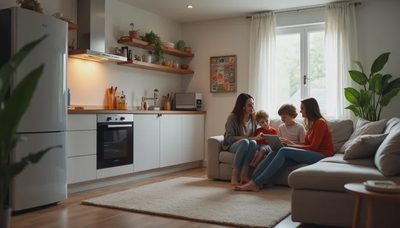
Every family with children and connected devices eventually needs boundaries. The families that struggle the most are usually the ones with long, complicated policy documents that no one remembers. We keep our rules short enough to recite and specific enough to settle most questions without a debate. The list below is what currently works in our house. Other families will adjust the details; the value is in having an explicit, shared baseline.
Why Short Rules Survive
Long lists of exceptions and special cases become impossible to enforce consistently. When parents cannot remember the full policy, children learn that the rules are flexible under pressure. A short set of clear statements is easier to apply the same way every day and therefore more effective.
Consistency Beats Intensity
A moderate rule that is enforced most of the time outperforms a strict rule that is frequently waived. Children notice patterns of enforcement more than the absolute strictness of any single statement. Predictability reduces negotiation because the outcome is already known.
Rules as Shared Infrastructure
When the rules are explicit and stable, they function like other household infrastructure—something that is simply there rather than something that must be reinvented in every conversation. This shift from repeated debate to shared understanding is the primary benefit of writing the rules down and living by them.
Cameras
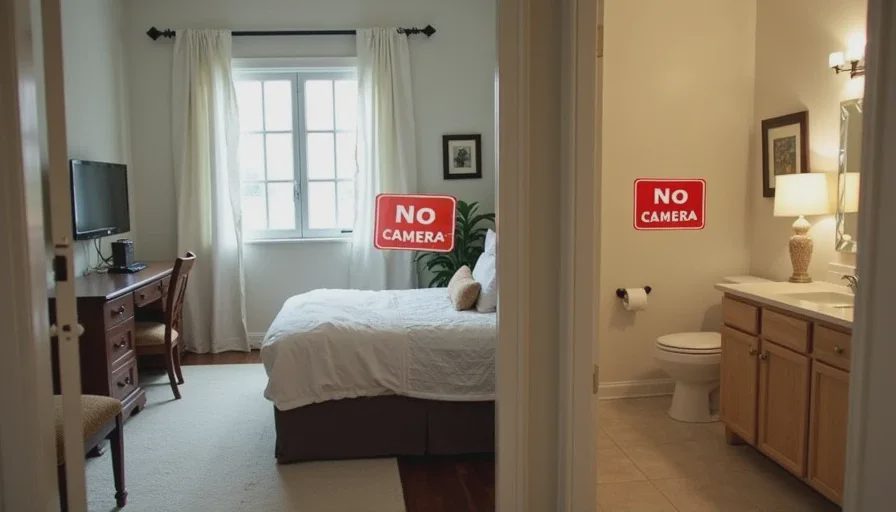
No cameras in bedrooms or bathrooms. Any indoor camera in a common area can be turned off or covered for gatherings and private conversations. Outdoor cameras are aimed at our property, not at neighbors’ windows or the public sidewalk beyond what is necessary for the entry. Only adults have full access to live views and recorded clips. Children do not receive login credentials. We tell guests if a camera is active in a space where they will spend time.
Private Spaces Remain Camera-Free
Bedrooms and bathrooms carry strong expectations of privacy. Placing cameras in those rooms creates ongoing tension and potential for misuse that outweighs any security benefit in an ordinary family home. The rule is absolute because partial exceptions are difficult to manage cleanly.
Common-Area Cameras Remain Controllable
When a camera exists in a living room or entry, the ability to disable or cover it quickly preserves the option of privacy during gatherings, sensitive conversations, or simply days when the household prefers not to be recorded. Control remains with the adults who live there.
Outdoor Aim and Neighbor Consideration
Outdoor cameras are pointed at our own doors, porch, and immediate approach paths. Avoiding prolonged views of neighboring windows or heavy sidewalk traffic reduces both privacy concerns and the volume of irrelevant alerts. Good aim is part of good citizenship as well as good security.
Voice Assistants
Voice assistants live in common areas, not in bedrooms. The microphone can be disabled with a clear physical or software switch when we want privacy. We do not use voice purchasing features. Children’s requests are filtered through the same content limits that apply to their other devices. We treat the assistant as a convenience tool, not as a companion or an authority.
Location Limits Protect Private Conversation
Keeping voice assistants out of bedrooms and bathrooms prevents always-on microphones from extending into spaces where private conversation is expected. Common-area placement preserves the convenience of timers, weather checks, and quick calendar capture without the privacy cost.
The Mute Switch Is Non-Negotiable
A clear, reliable way to disable the microphone is essential. Whether it is a physical button or a prominent software control, the household must be able to turn listening off without hunting through menus. The existence of the switch is part of what makes the device acceptable in the home.
Purchasing and Content Boundaries
Disabling voice purchasing removes an entire category of accidental or unauthorized orders. Applying the same content limits used on children’s other devices keeps the assistant consistent with the rest of the household media environment.
Screen Time
School nights have a firm end time for recreational screens. Tablets and similar devices charge overnight in a shared space, not in bedrooms. New apps and purchases require adult approval. Screen time is not used as the primary reward or punishment system; it is simply bounded. We review the limits a few times a year and adjust as the children grow.
Predictable End Times Reduce Negotiation
A consistent school-night cutoff removes the need to renegotiate every evening. Children know when recreational use ends, and parents are not required to invent a new rationale each time. Predictability itself becomes a form of calm.
Overnight Location Supports the Limit
Charging devices in a shared space rather than bedrooms makes the end of screen time physical as well as temporal. The device is no longer within easy reach after the agreed hour, which reduces both temptation and the need for repeated reminders.
Approval as a Checkpoint, Not a Barrier
Requiring approval for new apps and purchases creates a natural pause before new content enters the child’s device. The process is kept lightweight so it does not become a source of constant friction, yet it remains present enough to catch inappropriate or unnecessary downloads.
How the Rules Are Maintained
We state the rules in ordinary language when a new device arrives or when a boundary is tested. We do not expand the list casually. If a rule proves unworkable, we change it deliberately rather than letting exceptions accumulate. The adults follow the same privacy and attention principles they ask of the children; consistency matters more than perfection.
Introducing Rules With New Devices
Every new camera, assistant, or screen arrives with a short restatement of the relevant rules. Linking the rule to the device at the moment of introduction makes the boundary feel native rather than imposed after the fact.
Changing Rules Deliberately
When a rule no longer fits the family’s age range or circumstances, it is discussed and revised openly. Quiet accumulation of exceptions erodes the system. Deliberate revision keeps the rules both current and credible.
Adult Modeling
Children notice whether adults follow the same spirit of privacy and attention limits they enforce. Modeling the principles—muting assistants during private conversations, respecting camera-off times, putting phones away during family meals—gives the rules weight that pure authority cannot supply.
What We Deliberately Leave Out
We do not attempt to monitor every message or search. We do not require productivity apps to “earn” screen time. We do not install surveillance tools that the children cannot see or understand. Those approaches create more conflict than safety in ordinary households and shift the relationship from guidance to cat-and-mouse.
Trust as a Design Goal
The system is designed to protect and guide while still allowing age-appropriate independence. Maximal monitoring often signals distrust and invites workarounds. Proportionate, visible boundaries support growing responsibility more effectively.
Avoiding Gamified Control
Tying every minute of screen time to chores or productivity metrics turns the device into a constant negotiation surface. Simple time boundaries are easier to maintain and less likely to poison the relationship with the technology itself.
Transparency Over Covert Tools
Any monitoring or restriction that exists is acknowledged. Covert tools that are later discovered usually damage trust more than they prevent harm. Openness is treated as a feature of the system rather than a risk.
Family technology rules work best when they are few enough to remember and clear enough to enforce without a debate every evening. Cameras stay out of private rooms, voice assistants stay in common spaces with an off switch, and screen time has predictable limits. The result is a quieter house and fewer arguments. That is the standard we aim for.
Let’s make your home work for you, not the other way around.