
Why One Room Beats a Whole-House Project
Whole-house energy projects sound responsible and then stall under the weight of decisions, costs, and disruption. A single room is small enough to finish in a weekend and concrete enough that you can feel the difference. The habits and techniques learned in one finished space transfer directly to the next room later, creating steady progress instead of an abandoned master plan.
The Psychology of Finished Work
Completing a defined project produces a sense of accomplishment that incomplete large plans never deliver. When a room feels noticeably more comfortable or the lights no longer stay on for hours by accident, the household experiences immediate proof that small efforts work. That proof is what sustains motivation for the next space.
Avoiding the Overwhelm Trap
Ambition is useful until it becomes a barrier. Listing every possible improvement across an entire house quickly creates a project so large that it never starts. Limiting the scope to one room removes the barrier and replaces it with a clear, achievable checklist that can actually be finished.
Building Skills Incrementally
Each finished room teaches practical lessons about sealing, lighting, and device behavior that make the following rooms faster and more effective. The first weekend may feel deliberate and slow; later weekends benefit from experience and go more smoothly. Incremental skill-building is more reliable than attempting to learn everything at once on a whole-house scale.
Choose the Right Room
Pick a room used daily that already shows obvious opportunities—drafty windows, outdated lighting, a space heater that runs constantly, or an entertainment center that stays powered all the time. Bedrooms, living rooms, and home offices are the most common successful starting points. Kitchens and laundry rooms are better left for later because they contain more complex systems and competing priorities.
Daily-Use Priority
A room the family occupies every day delivers noticeable results faster than a rarely used guest room or storage space. Comfort improvements and reduced wasted lighting are experienced immediately, reinforcing the value of the work. Choosing a high-traffic room also means the improvements benefit more people in the household.
Visible Problems Make Better Targets
Select a room that already complains—cold corners, lights left on, devices that feel warm to the touch even when “off.” Visible or tactile problems give clear before-and-after feedback. Rooms without obvious issues can still be improved, but the motivation and satisfaction are usually lower.
Size and Complexity Limits
Keep the first project modest in square footage and system complexity. A medium bedroom or average living room is ideal. Very large open-plan spaces or rooms with extensive built-in electronics introduce variables that can stretch a weekend into an unfinished multi-weekend effort. Save larger or more complicated spaces until the basic process feels familiar.

Friday Evening: Observe and List
Spend thirty minutes in the room with a notebook. Note:
Windows and doors that feel drafty
Lights that are left on unnecessarily
Devices that stay plugged in and warm to the touch
Thermostat or register behavior if the room has its own control
Any dark corners that cause people to turn on extra lights
This list becomes the weekend checklist. Keep it short—five to seven items is plenty.
Saturday Morning: Seal and Block Drafts
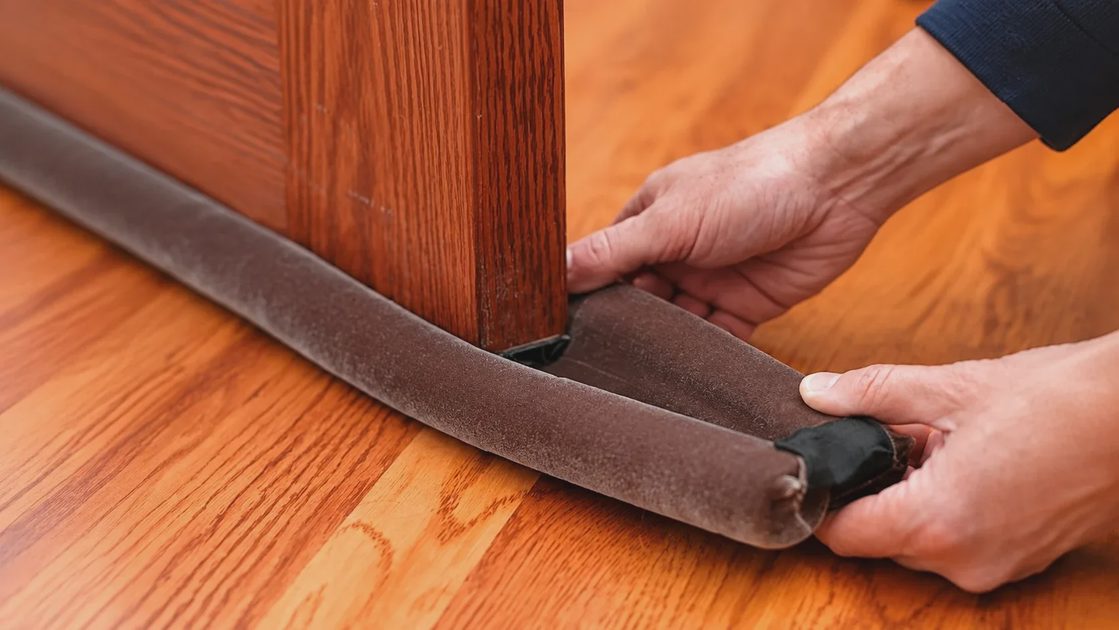
Air leaks are frequently the largest controllable source of discomfort and energy waste in an older room. Apply weatherstripping to operable window sashes and to the room door if it opens to a hallway, stairwell, or garage. Use removable rope caulk or sealing putty for small gaps around trim when a non-permanent solution is preferred. A draft snake or door sweep at the bottom of the door provides an immediate improvement.
Prioritizing the Largest Leaks
Start with the gaps you can feel with a damp hand or that show daylight. Large, obvious leaks deliver the most noticeable comfort improvement per minute of work. Smaller cosmetic gaps can be addressed later if time remains.
Safety Boundaries
Never seal combustion-appliance vents, dryer exhausts, or any opening required for safe appliance operation. If the room contains a fireplace, verify that the damper closes tightly. A chimney balloon or temporary draft stopper can help when the damper itself is worn, but permanent sealing of required flues is dangerous and must be avoided.
Materials That Work for Most Homes
Self-adhesive foam or V-strip weatherstripping, rope caulk, and simple door sweeps handle the majority of residential draft problems. These materials are inexpensive, widely available, and reversible if a mistake is made. More aggressive sealing methods can wait until experience with the basic materials has been gained.
Saturday Afternoon: Lighting and Controls
Replace the most frequently used bulbs with efficient LEDs if older technology is still present. Add a smart plug or mechanical timer to any lamp that is regularly left on by accident. Where overhead lighting is either too bright or too dim for the tasks performed in the room, introduce better task lighting rather than leaving multiple fixtures running at once.
Matching Light to Actual Tasks
Reading, desk work, and general movement require different light levels. Providing appropriate task lighting often allows overhead fixtures to remain off for long periods. The result is both lower energy use and better visual comfort.
Controlling Forgotten Lights
Lamps that are habitually left on respond well to simple schedules or motion-based control. A smart plug with a basic on/off schedule or a short motion timeout prevents hours of unnecessary operation without requiring anyone to remember to flip a switch.
Evaluating Existing Fixtures
Before buying new fixtures, check whether changing bulb type or adding a simple shade improves the light quality enough to reduce the number of fixtures needed. Many rooms are over-lit simply because the existing bulbs or shades distribute light poorly.
Sunday Morning: Devices and Standby Power
Unplug or switch off devices that do not need continuous power. Use a smart plug or a switched power strip for clusters of electronics so an entire group can be turned off with one action. Examine space heaters, dehumidifiers, or window units for setpoints and schedules that keep them running longer than necessary.
Identifying Always-On Loads
Devices that feel warm even when supposedly off are often drawing standby power. Charging bricks, entertainment equipment, and small appliances are common culprits. Grouping them on a switched strip makes it easy to cut power when the room is unoccupied for extended periods.
Adjusting Portable Climate Devices
Space heaters and window air conditioners frequently run at settings chosen for a different season or occupancy pattern. Lowering the setpoint slightly or adding a simple timer often produces measurable savings without sacrificing comfort during the hours the room is actually used.
Ceiling Fan Contribution
If a ceiling fan is present, confirm it is used to circulate air rather than as a substitute for adjusting the thermostat. Correct direction and moderate speed settings improve perceived comfort and can reduce the runtime of heating or cooling equipment.
Sunday Afternoon: Measure and Maintain
If a plug-in energy monitor is available, check the largest devices before and after the changes. Even without quantitative data, notice whether the room holds temperature more evenly and whether fewer lights remain on by habit. Write down every change made and any future maintenance reminders so the improvements persist.
Qualitative Before-and-After Notes
Record how the room felt on Friday evening and how it feels on Sunday afternoon. Notes about drafts, light levels, and device behavior provide a practical baseline for judging success and for planning the next room.
Creating a Simple Maintenance Reminder
Weatherstripping eventually compresses, batteries in sensors or timers need replacement, and schedules drift as household routines change. A short calendar note or a line in a household notebook keeps the improvements from slowly eroding.
Preparing the Next Room
While the experience is fresh, jot down which techniques worked most smoothly and which materials were most effective. That short reflection makes the following weekend project faster and more confident.
What This Plan Does Not Include
It does not include new windows, insulation blow-ins, or HVAC redesign. Those are larger projects with different budgets and timelines. It also does not require buying a full smart-home system. The tools are weatherstripping, efficient bulbs, a few plugs or strips, and attention.
Closing Thought
Energy efficiency in a family home grows from finished small projects rather than unfinished large ambitions. One room, one weekend, a short list of concrete fixes—that is enough to create a noticeable improvement and the confidence to tackle the next space later. Keep the scope tight and the work practical, and the house becomes a little easier on the utility bill without becoming a construction site.
Let’s make your home work for you, not the other way around.